Putting real numbers behind the plan
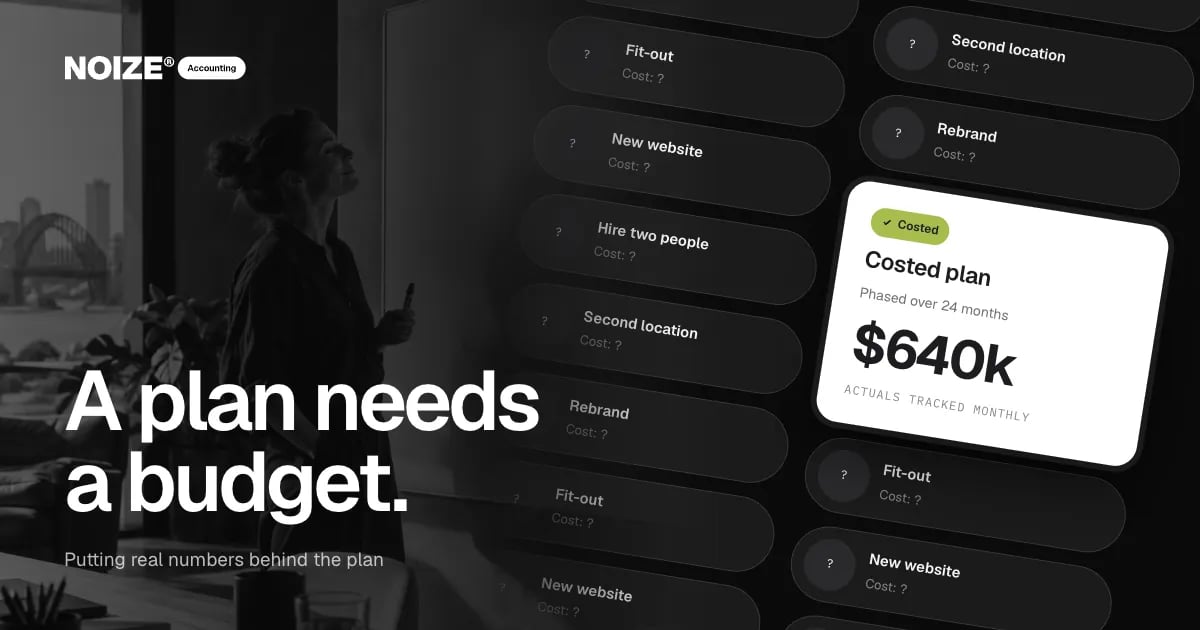
The plan is exciting. A new website. Two new hires. A second location. A rebrand. A fit-out. Ask what it will all cost, and when, and the answer is a shrug. Each item has a rough idea attached. Nobody has added them up or checked them against the cash the business will actually have.
A strategy without a budget is a wish list. Good intentions turn into stalled projects, cash squeezes and priorities that change every month because nobody knew what was affordable.
The short version
- Strategy decides what the business will do.
- Accounting works out what it will cost, when, and whether the business can carry it.
- Together they turn priorities into a costed, phased plan with a budget and a forecast.
- Tracking actual results against that plan every month lets the business adjust before it goes off course.
- NOIZE provides administrative support and business strategy.
- Where work is outside our skillset, or the law requires it, we make sure an appropriately qualified professional is involved.
From priorities to a costed plan
01List the priorities
Start with the roadmap from Strategy: what will happen and in what order.
02Cost each item
Get realistic costs, with quotes where possible, including ongoing costs such as wages and subscriptions.
03Add the timing
When each cost will be paid and when each benefit will start.
04Build the forecast
Combine costs, expected revenue and existing commitments into a cash-flow forecast.
05Test affordability
Check that the business stays comfortably cash positive. If not, re-phase, re-scope or plan funding.
06Set the budget
Agree the spending limits and targets for each area.
Tracking the plan against actuals
Each month, compare actual results with the plan. Are costs in line? Is revenue on track? Are projects on schedule? Small variances are normal. Large ones are a signal to adjust, before they compound.
> I've co-founded companies where the strategy was brilliant and the budget was an afterthought. We ran out of cash halfway through doing the right things. The next time, we costed every step first and tracked it monthly. Same ambition, very different outcome.
“Things really got moving beyond our expectations.”
Why Strategy and Accounting belong together
Strategy without numbers can promise too much. Numbers without strategy can cut the wrong things. When NOIZE Strategy and NOIZE Accounting work together, every priority is tested against what the business can afford, and every budget decision is tested against what matters most. When the plan needs more capital than the business has, NOIZE Finance can help fund it.
An illustrative example
Picture a hospitality group with a roadmap including a rebrand, a new website and a third venue. Costed and forecast together, the full plan would leave cash dangerously low in the second half of the year. Phasing the rebrand and website first, then funding the venue fit-out through a facility arranged by Finance, keeps the business healthy and every project on track.
Mistakes to avoid
- Don't cost only the obvious items. Include ongoing costs and contingencies.
- Don't build a budget once and ignore it.
- Don't cut strategic priorities without understanding the impact.
How NOIZE Accounting works with you
The work an organised person could do themselves is where NOIZE Accounting steps in: modelling decisions, reviewing margins and pricing and planning cash flow. We also give business strategy advice around putting real numbers behind the plan, so decisions are made with the bigger picture in view.
Work beyond our skillset, or that needs a registered tax agent, goes to an appropriately qualified professional. That split is set out clearly in the strategy or proposal.
The aim is simple: fewer things on the owner's list, handled properly, with the right expertise involved at the right time.
Questions to ask before you plan
- What are our top priorities for the next two years?
- What will each cost, including ongoing costs?
- When will each be paid for?
- What return do we expect, and when?
- How much cash will we have each month?
- What happens if results are slower than planned?
These questions turn a list of ambitions into a plan that can actually be delivered.
What good looks like
A costed, phased plan built from the strategic roadmap. A budget and forecast that show the business stays comfortably cash positive. Monthly comparison of actual results against the plan. Early adjustments when variances appear. Funding planned in advance where the plan needs it. Owners know what they can afford, and when.
Where to start this week
Take your top five priorities for the year and write a cost and a month next to each. Add them up and compare with the cash you expect to have. The gap, or the room, tells you what to do next. See accounting.noize.com.au and strategy.noize.com.au.
How Accounting connects to the rest of NOIZE
This is where the wider NOIZE group makes a difference. Where the law requires a registered tax agent, an appropriately qualified professional step in. Together, the numbers support every major decision the business makes. NOIZE Books keeps the records current so advice is based on this month, not last year. NOIZE Strategy sets the priorities, and Accounting costs them and tests what the business can afford. NOIZE Finance uses Accounting's statements and forecasts to prepare a funding pack that makes the broker's job easy. NOIZE Legal works with Accounting on structure.
Related reading
This article is general information only. It is not legal, tax or financial advice, and it does not take your circumstances into account. Speak to a qualified adviser before acting.
NOIZE provides administrative support and business strategy. Where work is outside our skillset, or the law requires it, we make sure an appropriately qualified professional is involved.
Common questions
What is a business budget?
A plan of expected income and spending over a period, used to guide decisions and measure progress.
How is a budget different from a forecast?
A budget sets targets. A forecast predicts what will actually happen and is updated as things change.
How often should we review the budget?
Monthly, comparing actual results with the plan.
What is financial modelling?
Building a model of the business's finances to test the impact of decisions and scenarios.
What if the plan isn't affordable?
Re-phase, re-scope or plan funding. Strategy, Accounting and Finance can help choose.
Should contingency be included?
Yes. A contingency allowance protects the plan from unexpected costs.
Can NOIZE build our budget?
Yes. NOIZE Accounting builds budgets and forecasts aligned to your strategy.
What do you need to start?
Your priorities, current books and any quotes or estimates you already have.
Is NOIZE Accounting a registered tax agent?
We handle planning, reporting and strategy directly. Where the law requires a registered tax agent, an appropriately qualified professional is involved.
What is a variance?
The difference between planned and actual results. Large variances are a signal to investigate and adjust.
Should the plan change during the year?
The structure should stay, but details should be updated as results and circumstances change.
What is budgeting?
Setting expected income and spending for a period, so results can be measured against a plan.
What is management accounting?
Reporting and analysis designed to help run the business, rather than to meet compliance requirements.
Can you help us set prices?
Yes. Accounting can analyse costs and margins to support pricing decisions.
Your first strategy conversation is on us.
Have a chatThe brand for business.