Numbers that tell you what to do next
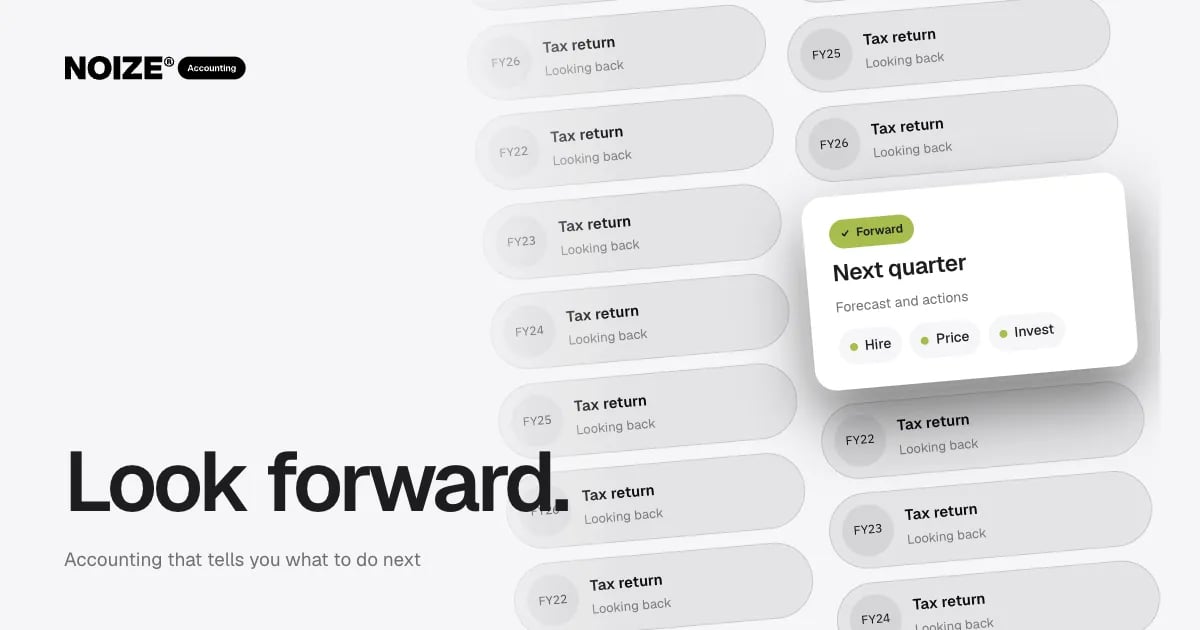
FY22: tax return. FY23: tax return. FY24: tax return. FY25: tax return. Each one accurate, lodged on time and filed away. Each one describing a year that had already finished.
Tax time is the only time you see the numbers. For many owners, that is the whole relationship with their accountant. Compliance is done. But nothing in those returns tells the business what to do next.
The short version
- Compliance accounting looks back: tax returns and statements for years already finished.
- Forward-looking accounting uses the same numbers to plan: monthly reporting, forecasts, tax planning during the year and advice on hiring, pricing and investment.
- It turns records into decisions and replaces surprises with a plan.
- NOIZE provides administrative support and business strategy.
- Where work is outside our skillset, or the law requires it, we make sure an appropriately qualified professional is involved.
Looking back versus looking forward
01Looking back
Annual tax returns, financial statements and compliance. Necessary, accurate and too late to change anything.
02Looking forward
Monthly management reports, cash-flow forecasts, budgets, scenario planning and regular advice. Timely enough to act on.
What a forward-looking accountant does
01Reviews the numbers monthly
Profit, cash and debtors compared with budget, with the reasons behind any changes.
02Forecasts cash flow
Twelve months ahead, updated regularly, showing when cash will be tight or available.
03Plans tax during the year
Timing, structure and decisions considered quarterly, not in June.
04Models decisions
What happens if you hire, raise prices, open a site or buy equipment.
05Sets budgets and targets
So the business can measure progress during the year.
06Advises on structure and funding
Making sure the business is set up well for its next stage.
> I've invested in dozens of ventures, and I look at the forecast before the pitch deck. Founders who know their numbers a year ahead usually know their business. Those with a bank balance and a feeling are taking more risk than they realise.
“Things really got moving beyond our expectations.”
What owners get from it
Fewer surprises at tax time. Confidence in big decisions. Early warning when cash will be tight. A clear view of which parts of the business make money. And a better relationship with the numbers: they become a tool rather than annual chore.
Why current books come first
Forward-looking accounting depends on current records. NOIZE Books keeps them up to date every week, so NOIZE Accounting can advise on this month rather than last year. When the plan needs capital, Accounting hands to NOIZE Finance with the forecast ready.
An illustrative example
Picture a growing clinic that sees its accountant once a year. A move to quarterly advisory meetings introduces a cash-flow forecast, a simple budget and monthly reporting. In the first quarter, the forecast shows a cash dip coinciding with a planned equipment purchase. The purchase is moved and financed differently, avoiding a squeeze that would otherwise have hit payroll.
Mistakes to avoid
- Don't treat tax compliance as the whole job.
- Don't wait for year-end to look at performance.
- Don't make big decisions without modelling them first.
How NOIZE Accounting works with you
In practice, NOIZE Accounting handles the hands-on work directly: modelling decisions, reviewing margins and pricing and planning cash flow. Strategy advice on numbers that tell you what to do next comes with it, so nothing is done in isolation.
Where the law requires a registered tax agent, or it is outside our skillset, we make sure an appropriately qualified professional is involved. The approach depends on the business and is settled in the proposal.
Some owners like to build their own spreadsheet and have us check it. That works too, and many move to a fully handled arrangement later.
Questions to ask your accountant
- When did we last look at a forecast together?
- What does our cash look like in six months?
- Which parts of the business are most profitable?
- What tax decisions should we make this quarter?
- What would need to be true for us to afford the next hire?
If your accountant can answer confidently, you have an adviser. If not, it may be time for a different kind of relationship.
What good looks like
Books keeps records current weekly. A short monthly report shows profit, cash and debtors against budget. A rolling twelve-month forecast is updated regularly. Quarterly meetings cover performance, tax planning and upcoming decisions. Big decisions are modelled before they are made. Tax time holds no surprises because the numbers have been watched all year.
Where to start this week
Ask yourself what you would decide differently if you knew your cash position six months from now. If the answer is "quite a lot", a forecast is the most useful document you don't yet have. See accounting.noize.com.au.
How Accounting connects to the rest of NOIZE
Accounting turns records into decisions, so it connects closely with the departments on either side. NOIZE Books keeps the records current so advice is based on this month, not last year. NOIZE Strategy sets the priorities, and Accounting costs them and tests what the business can afford. NOIZE Finance uses Accounting's statements and forecasts to prepare a funding pack that makes the broker's job easy. NOIZE Legal works with Accounting on structure. Where the law requires a registered tax agent, an appropriately qualified professional step in. Together, the numbers support every major decision the business makes.
Related reading
This article is general information only. It is not legal, tax or financial advice, and it does not take your circumstances into account. Speak to a qualified adviser before acting.
NOIZE provides administrative support and business strategy. Where work is outside our skillset, or the law requires it, we make sure an appropriately qualified professional is involved.
Common questions
What is a proactive accountant?
An accountant who helps plan ahead with forecasts, budgets, tax planning and advice, not just annual compliance.
What is management accounting?
Financial reporting and analysis used to run the business and make decisions.
How often should I meet my accountant?
For a growing business, at least quarterly.
What is the difference between compliance and advisory?
Compliance lodges returns and statements. Advisory uses the numbers to plan and decide.
Is advisory accounting only for large businesses?
No. Small and growing businesses often benefit most, because each decision matters more.
What do I need for advisory accounting?
Current books, which NOIZE Books can provide.
Can you help with pricing decisions?
Yes. Accounting can model margins and the impact of price changes.
What should I bring to a first conversation?
The last set of accounts and the decision you are trying to make.
Is NOIZE Accounting a registered tax agent?
We handle planning, reporting and strategy directly. Where the law requires a registered tax agent, an appropriately qualified professional is involved.
How is forward-looking accounting different from bookkeeping?
Bookkeeping records what happened. Forward-looking accounting uses those records to plan what happens next.
Can I keep my accountant for tax and use NOIZE for planning?
Yes. Many clients do exactly that.
Can you help us set prices?
Yes. Accounting can analyse costs and margins to support pricing decisions.
Do you work with businesses across Australia?
Yes. Most accounting work can be done remotely, wherever the business is based.
Can NOIZE help us understand our numbers better?
Yes. Plain-English explanations of your reports and forecasts are part of how we work.
Your first strategy conversation is on us.
Have a chatThe brand for business.